
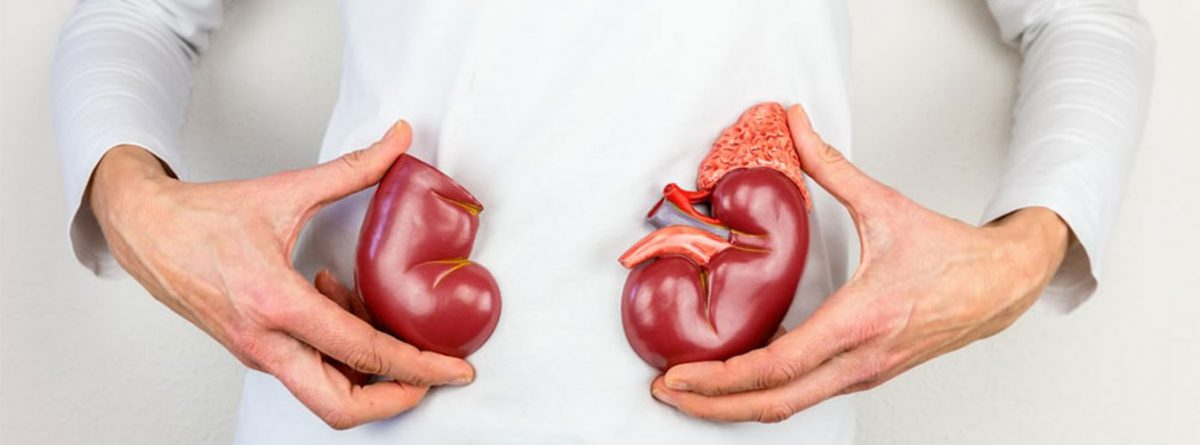
How can you keep your kidneys healthy?

Kidney diseases are silent killers, which can widely affect your quality of life. There are many ways to reduce the risk of developing kidney disease.

How can you keep your kidneys healthy?

Kidney diseases are silent killers, which can widely affect your quality of life. There are many ways to reduce the risk of developing kidney disease.

•Keep fit, be active

This can help to maintain ideal body weight, reduce your blood pressure, and the risk of Chronic Kidney Disease.

• Eat a healthy diet

This can help to maintain ideal body weight, reduce your blood pressure, and prevent diabetes, heart disease, and other conditions associated with Chronic Kidney Disease.
Reduce your salt intake. The suggested sodium intake is 5-6 grams of salt per day. This comprises the salt already in your foods. (around a teaspoon). To decrease your salt intake, try and limit the quantity of processed and restaurant food, and do not add salt to food. It will be simpler to control your salt intake if you prepare the food yourself with fresh ingredients.

• Check and control your blood sugar

Around half of people who have diabetes do not know they have diabetes. Therefore, you need to check your blood sugar level as part of your general body checkup. This is especially important for those who are approaching middle age or older. About half of people who have diabetes incur kidney damage, but this can be restricted/ limited if the diabetes is well controlled. Monitor your kidney function regularly with blood and urine tests.

• Check and control your blood pressure

About half of people who have high blood pressure do not know they have high blood pressure. Therefore, you need to check your blood pressure as part of your general body checkup. This is especially important for those who are approaching middle age or older. High blood pressure can damage your kidneys. This is especially likely when compared with other factors like diabetes, high cholesterol, and Cardio-Vascular Diseases. The risk can be diminished with good control of blood pressure.
The normal adult blood pressure level is 120/80. Hypertension is diagnosed if, when measured on two different days, the systolic blood pressure readings on both days is ≥140 mmHg and/or the diastolic blood pressure readings on both days is ≥90 mmHg (WHO). If your blood pressure is persistently elevated above the normal range (especially if you are a young person), you should consult your doctor to discuss the risks, the need for lifestyle modification and medication treatment.

• Take the appropriate fluid intake

The appropriate level of fluid intake for any individual depends on many factors including exercise, climate, health conditions, pregnancy, and breastfeeding.
Usually, this means 8 cups, approximately 2 liters (quarts) per day for a healthy person in a comfortable climate condition.
This needs to be adjusted when in severe climate conditions. Your fluid intake may require to be changed if you have kidney or heart or liver disease. Consult your doctor on the appropriate fluid intake for your condition.

• Don’t smoke

Smoking reduces the flow of blood to the kidneys. When more limited blood reaches the kidneys, it can decrease their capacity to function normally. Smoking also raises the risk of kidney cancer by around 50 percent.

• Don’t take over-the-counter anti-inflammatory pills regularly

Common drugs such as non-steroidal anti-inflammatory (NSAIDS)/ pain-killer (e.g. drugs like ibuprofen) can injure the kidneys if taken daily.
If you have kidney disease or limited kidney function, taking just a few doses can do harm to your kidneys. If in doubt, verify with your doctor or pharmacist.
Your kidneys strive hard for you, day in and day out. To take great care of them, you’ll want to concentrate on these things that make a big difference.


Warning Signs of a Heart Attack

It is very essential that the early warning signs of a heart attack must be recognized so that treatment is attempted quickly. A heart attack is generally

It is very essential that the early warning signs of a heart attack must be recognized so that treatment is attempted quickly. A heart attack is generally slow and the person experiencing it, might not even is sure of this condition. The symptoms of a heart attack vary amongst individuals. Signs that the person endured in the first attack might be distinct from what he is experiencing in the second time. Though the most common symptoms are pressure or pain in the chest, there can be a number of other signs too.

Following are the signs of a heart attack:

1. Headache, jaw pain, and toothache

During a heart attack, pain can go down to the head, back, or to both the arms. Some people can also experience headache and toothache. There is a possibility of these kinds of pains also in a heart attack.

2. Nausea

The feeling of nausea or sickness in the stomach is a less common but a thinkable sign of a heart attack. In some cases, one can experience burping or hiccups with nausea while others may have the feeling of indigestion, related to a heart attack. These symptoms occur mainly in women. In some cases, patients have also complained of experiencing the flu.

3. Vomiting

In cases where a heart attack is accompanied by nausea, there can be severe vomiting also.

4. Uneasiness in the upper-middle abdomen

In some cases, pain during heart attacks has been described as pain in the center of the general epigastric or pain in the stomach. This pain is like a feeling of heaviness or uneasiness or sharp pain that can stay for a few minutes. This pain can be experienced without pain in the chest.

5. Indigestion and Heartburn

In the same manner as burping and hiccups, some people also experience indigestion and heartburn. The sense of pressure and pain can also happen in the abdominal area or burning sensation in the heart at the time of a heart attack.

6. Pain in the upper back

During a heart attack, pain can also expand in the upper back. Most of the time, pain in the back that starts due to a heart attack can say to be happening between the shoulder blades.

7. General sickness

A heart attack sometimes is followed by a feeling of common sickness when a person feels unwell. The person can experience tiredness and dizziness where he can or cannot faint. A vague feeling of illness persists. One can even experience a panic attack like everything is going down the drain.

8. Zero symptoms

Around one-quarter of all the heart attacks show no symptoms and this is called a silent heart attack. There is no pain in the chest. This kind is quite common in people suffering from diabetes mellitus.

We have now stated that the symptoms and signs of a heart attack are quite mild and even imprecise, but it is very crucial that we understand that an attack with no or mild symptoms is as dangerous as an attack with severe pain in the chest. Many times, medical attention is delayed as a heart attack is thought to be tiredness, tension, indigestion, and anxiety. Timely diagnosis and proper treatment can save a lot of lives. Any kind of delay can be seriously damaging or

fatal.

5 Signs & Symptoms of Liver Damage

Although no organ of the body can be of any lesser importance, the liver has its special significance and importance. The liver is one of the largest

Although no organ of the body can be of any lesser importance, the liver has its special significance and importance. The liver is one of the largest organs of the body, roughly the size of a football. It is perched right in the upper-right portion of the abdominal cavity, below the diaphragm, on the top of the right kidney, intestines, and stomach. The liver performs some of the most vital functions in
the body. Almost everything you eat, drink, breathe, and rub to your skin is processed by the liver and this is just only a part of what all it does. Due to it is working like a factory, 24 hours a day, it is always prone to many different kinds of diseases which can range from being dangerous to even fatal. In this blog, we give
5 signs and symptoms of liver damage that you can look out for in your body to recognize this serious problem. No matter to what degree you find these symptoms, it is important for you to take note of them and consult a physician.

1. Low Platelets

These disks shaped, colorless and minute cell fragments are found in great abundance in the bloodstream and are one of the most important components required for clotting. However, the low platelet count can be associated with liver
damage too since many sufferers of liver damage are affected by the condition. Even though Thrombocytopenia (low platelet count) is a serious affliction, it is also one of the key indicators in diagnosing liver damage.

2. Bruising Easily

Bruising easily is connected to a blood disorder and the disorder can be associated with liver disease. Easy bruising happens when your blood does not clot easily which is due to a low platelet count or Thrombocytopenia. If you often see cuts and bruises on your body without any rational explanation, then it is time reach to your physician as early as you can.

3. Swollen Spleen

The spleen is situated in the upper left corner of the abdomen, behind the rib cage, and is associated with the drainage network for fighting the infection. If something’s not right with your body then probably it’s time to take the health of your spleen into account. Symptoms of a swollen or enlarged spleen include indigestion, pain, tenderness, weightlessness as well as irritation that affects the left shoulder.

4. Stomach Pains

Stomach pains are associated with many causes. Often when any one of the organs of the stomach is damaged it can affect the functioning of other organs with which it is associated. Pain may also be caused due to swelling of the liver. Thus, if you consistently experience pain in the abdomen area, then it is time to get it checked with a doctor or a physician immediately.

5. Loss of Appetite

Loss of Appetite is another symptom that can signal a problem with the liver. Though, some doctors attribute it as much a psychological symptom as against a physical one. When the liver is not functioning properly, it disturbs the entire process of digestion which becomes strained and unpleasant. This automatically makes the brain to send the signals indicating that the body is not hungry in order to protect itself from the pain and trouble eating has caused it.